Monday, August 3, 2009

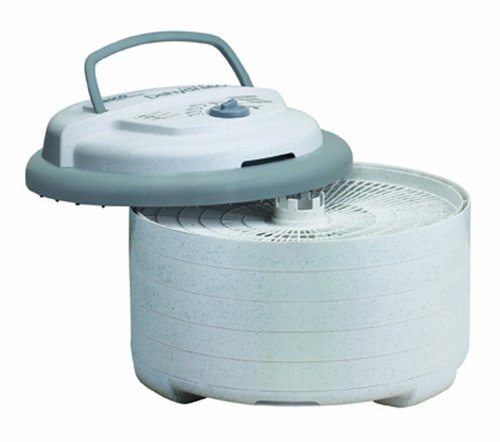
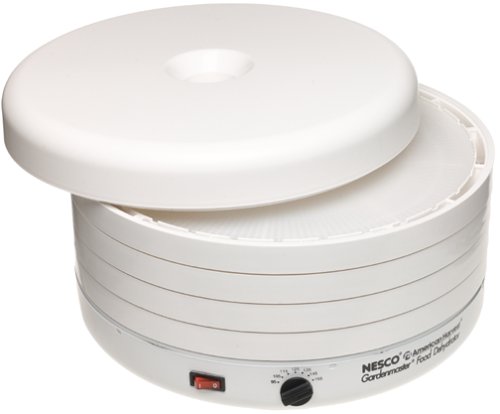
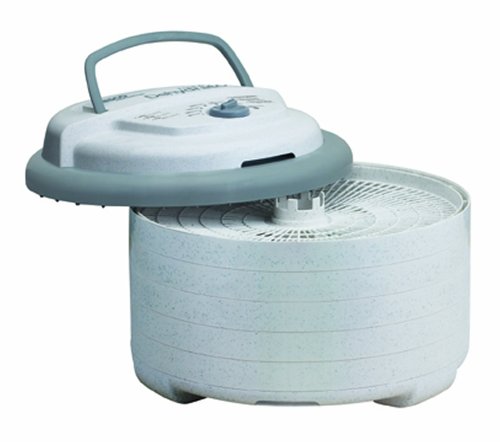
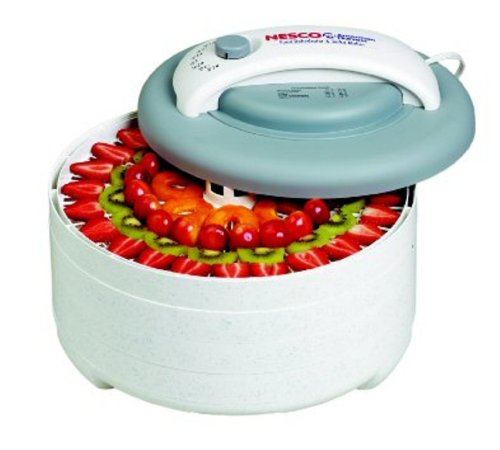
Nesco American Harvest 5-Tray FD-35 425-Watt Snackmaster Dehydrator

This unit features Nesco/American Harvest's innovative Top Mounted Powerhead that dries food quickly and evenly with superior results. Detaches to make dehydrator dishwasher safe for easy clean up. Fan-Flow Technology means faster, more even drying with no tray rotation necessary. Perfect for the beginner.


Many people want to make oven beef jerky because they either do not have or do not want to buy a dehydrator. Below you will find an easy to make and great tasting beef jerky recipe and all you need is your oven, some meat and a little bit of spices. You will have great tasting jerky in no time!

Our recipe calls for flank steak and the first thing you will need to do is cut it. However, before you try to cut the meat, make sure you put the meat in the freezer for half an hour because it will make it much easier to cut. Cut the meat into a quarter inch strips and make sure to cut the meat across the grain.

Next you will need to get the following ingredients:

1 Clove
4 tb Lemon Juice
1/2 c Honey
Pepper
Salt
1/2 c Soy Sauce

Mix all ingredients together and them place the meat into the marinade. Let this sit for at least 2 hours and a little longer if you are not in a hurry. Better yet, place it in the refrigerator over night to let it really marinate nice and good.

After your meat has had time to marinate, it is time to cook it. Take you meat slices and place them on a rack in a pan. Place the pan in your over and cook at 150 degrees for about 8- 12 hours. After eight hours you will want to start checking the jerky to make sure it is not overcooking.

When the meat is done is should bend but not break. You want to make sure it is not still wet and has dried out to a good level. If it breaks, you cooked it too long so make sure and adjust the cook time the following time you make your over beef jerky. Now sit back and enjoy your beef jerky.

Want to get even more free beef jerky recipe? Come on over to our beef jerky recipe site where we have a long list of jerky recipes for you. One of our favorites is our ground beef jerky recipes and our spicy beef jerky recipes. Come see what we all have to offer.

dehydrator

Friday, July 17, 2009

Nesco American Harvest FD-61 Snackmaster Encore Dehydrator and Jerky Maker

This convenient dehydrator makes great tasting, healthy snacks & jerky! Introducing the Snackmaster?? Encore???. It's Grey top and marbled design features 500 watts of drying power, and generates maximum speed and quality for dehydrating fruits, vegetables, beef jerky, and venison jerky. Helps dry food in hours, not days like ordinary food dehydrators. The top mounted fan eliminates the worry of liquids dripping into the the heating chamber!You can make delicious beef jerky, turkey jerky, fish jerky, trail mix, homemade yogurt, apple snacks, banana chips, dried soup mixes, dried tomatoes, watermelon, cantaloupe, honeydew, mangoes, papaya and other dried fruits at a fraction of the cost. Make dried herbs and spices; also make potpourri and dried flowers for any occasion.


Our needs as consumers are satisfied with products from abroad. In the US, every year we import millions of tons of oil, natural gas and other products that we need on a daily basis. This is mainly due to the fact that the production of these needed fuels is not enough to cover the needs of the consumers.

But how are these things transported? The imported products comes via ships, oil tankers that carry them over the sea, but on land we need pipelines to move them from the starting point, which is the production area, to their final destination, the consumers. People who are working in the industry need to know a lot of information regarding pipelines so they can maintain the high quality of their services.

A pipeline map is the first thing any company needs, because it supplies information regarding the route each pipeline follows. It is not very easy to keep tack of a tube that covers an area that sometimes exceeds a few hundred miles.

Oil pipelines are manufactured from plastic or steel tubes, with various diameters. Most of them are buried from to two meters underneath the ground, so an accurate pipeline map is necessary if you want to keep track of where your pipeline is.

Finding such an accurate pipeline map is not the easiest thing to do. The best choice you can make is with a specialized company that has dedicated most of its activity to creating highly accurate maps of all the major pipelines in the US.

Once you have found the desired pipeline map, the route of the pipelines are not enough. Sure you know where they are, but there are a lot more things you need to know regarding them. Pressurization, temperature variations and flow control are just a few of a large number of factors that influence the correct proceedings of daily activities when it comes to pipelines.

In order to have control over these factors, you need to have access to relevant data. A pipeline GIS - geographic information system - can help you do just that. To many this is a new term, so I'll try to explain what it consists of and how it can help you.

The pipeline GIS is a system that is capable of storing, integrating, analyzing, editing, sharing and displaying the much needed information regarding any pipeline. The whole idea behind this concept is based on user interactive queries.

A pipeline GIS is very easy to use and it provides the needed information in no time as opposed to the research you would have to do to gain it. You establish your point of interest, select what you want and the results are displayed in an instant. This will save you precious time and you can go on with your activities a lot faster than the traditional way.

Remember that I told you that a pipeline map should only be purchased from specialists? The same goes for a pipeline GIS and if you want the best products on the market all you need to do is go online and visit the website rextagstrategies.com.

Do not rely on second rate companies to provide vital information on pipelines. Choose the website mentioned afore as the source and you will receive the best data in the industry with a pipeline map and pipeline GIS from them.

dehydrator

Sunday, July 12, 2009

Nesco¿FD-1018P American Harvest 1000-Watt Gardenmaster Dehydrator and Jerky Maker


Halloween has always been a favorite time of year for me. Not only is it my birthday, but the air is clean and crisp, the leaves have turned colors and its just a very pretty time of year.

Id like to share some fun Halloween ideas and recipes with you:

Halloween cookie cutters are a must. You can use these cookie cutters on bread to make Halloween sandwiches. Kids love jack-o-lantern shaped sandwiches. You can spread their favorite sandwich topping on the bread once its cut.

Purchase M&Ms from a store that sells specific colors. Buy orange and green M&Ms and then use them in your favorite chocolate chip cookie recipe substituting the M&Ms for the chocolate chips.

You can also put those same M&Ms in your favorite rice krispy treat recipe. Its amazing how these two colors transform recipes into Halloween recipes.

Look for mini cookie cutters. They can often be found in kitchen specialty shops. If you find pumpkin mini cookie cutters, these work great on cheese. Buy sliced cheese. Cut the cheese with the mini cookie cutters and then put the slice of round cheese on a Ritz cracker.

Prepare your favorite brownie recipe and then top with candy corn pieces.

Make hamburgers and use your cookie cutters on full size slices of cheese. Serve open faced so that the pumpkin or ghost shaped cheese is on top.

Many stores sell spinach pasta. Green pasta with red sauce is very Halloween looking to kids.
Make english muffin pizzas. Add sauce and cheese and then cover with pepperoni slices. Use pineapple chunks to make eyes, nose and mouth.

What would Halloween be without pumpkin flavored items? Here are a few pumpkin recipes for you:

Pumpkin Dip

2 8-ounce packages cream cheese, softened

1 large 30-ounce can of pumpkin

4 cups powdered sugar

2 teaspoons cinnamon

2 teaspoons ginger

Mix everything together and serve. Kids love to dip both fruit and cookies into this dip.

And what about pumpkin muffins? I love pumpkin muffins warmed with butter on them:

Pumpkin Muffins

3 1/3 cups flour

3 cups sugar

2 teaspoons baking soda

1 1/2 teaspoons salt

1 teaspoon cinnamon

1 teaspoon nutmeg

1/4 teaspoon ground ginger

1 cup oil

4 eggs

2/3 cup water

2 cups pumpkin

Mix all dry ingredients together in a bowl. Add the remaining ingredients and mix. Pour into muffin tins. Batter will rise, so only fill the muffin tins 2/3 of the way full. Bake at 350 degrees for about 20 minutes.
Decorating your table can be fun also. Use a combination of blacks and oranges. Use cat or witch shaped bowls. I have a friend who owns plates, creamers and tea pots in the shape of cats. You can also sprinkle your M&Ms and candy corn on the table. The kids can eat the decorations.

Enjoy Halloween with your kids and their friends at home with all of the above treats and ideas.

Audreys mom always entertained when she was growing up. Audrey learned to prepare for large groups and has often entertained 15-30 people in her home at a time. You can find more great recipes at http://www.recipe-barn.com

dehydrator

Saturday, July 11, 2009

Nesco American Harvest FD-75PR 700-Watt Food Dehydrator

The NESCO Professional Food & Jerky Dehydrator has more power than most dehydrators -- 700 watts -- which means faster drying time. You will have results in hours, not days. The top mounted fan with patented Converga-Flow action pressurizes air downward through the outer ring and horizontally across each individual tray, converging at the center, for fast, even drying. No need to rotate trays. The adjustable thermostat allows you to dry different foods at proper temperatures (95-155 F), providing the flexibility to produce the best drying results. As your needs grow, the Professional Food & Jerky Dehydrator can be expanded up to 12 trays.


Today saw steel prices soar to record highs as a report released by world steel producers confirmed worries that current production has failed to keep pace with world demand. One industry official, who did not wish to be named, expects the panic buying to continue and noted that "for the past decade, prices of scrap steel fluctuated between $50-$80 USD/ton. Late last year, that price doubled to $150 -$200 USD/ton. By March 2008 it doubled again to $345USD.

Today's surge to $865 USD/ton reflects a depletion of steel reserves to historic lows and the inability to increase production to keep pace with world demand." One economist today noted that steel at these price levels will have a devastating effect on consumers worldwide. The world's economies are built on steel. Without it, the machine breaks down. Right now there simply isn't enough to go around.

Where will it stop? Nobody seems to know. After today's activity, many feel certain that more increases are ahead. How high will it go?

Well, it depends.

As the old' saying goes, there's good news and bad news. First, the good news. The above headline isn't real. The story is fiction and the record prices described haven't actually happened yet. The bad news is that word "yet." You see, while fiction now, a good part of what transpires in this story is slowly becoming reality as we speak.

Scrap steel, which was cheaply priced for years, really has risen to over $345.00/ Ton within the past few months. Reserves are being tapped. Worldwide demand for fuel, metals and food staples are creating shortages, and prices on these items continue to increase. China's recent economic expansion has had a huge impact on commodity supplies & prices. The same supply/demand fundamentals that have driven crude prices to new highs are now driving steel prices higher.

While demand for crude increases worldwide, US policy has been to conserve, rather than to increase supply. For years the strong dollar enabled the US to rely on the rest of the world to produce discounted resources that we would import to meet our nation's growing demand. The resulting complacency resulted in a reliance on aging systems without any new additions to take their place. Over 30 years have passed since a major nuclear power plant, oil refinery or steel mill has been built in this country. The last ones we did build, which were state-of-the-art in their time, are becoming aged and antiquated and are no longer capable of producing enough to sustain current demands.

As the once mighty Yankee dollar loses its luster, our ability to import shortfalls cheaply is no longer the viable option it once was. To make matters worse, the worm has turned in the sense that the recent strength of the Euro and the dollar's weakness are slowly turning the USA into an exporter where it once was the dominant importer. The result is an ever increasing demand on our already limited resources.

The shortages and resulting price increases we are seeing today are not an overnight occurrence. The US has more untapped natural resources than any country on the planet. As one of the largest consumers of the world's resources, one would think we would be thinking of ways to use what we have. Yet, for the past 30 years, the US has adopted a policy of using the resources of others while preserving our own, treating them like holy relics that should not be touched. Instead of finding ways to tap known resources, the US for the past 30 years has relied on the rest of the world to do it for us.

Americans feel that their appetite for foreign resources should be met on command. The world should not only produce whatever we want, but do it at a low price. So, if we have a gas shortage, it's the Middle-East's fault. Drill more wells but do it on your land and off your shores; build more refineries but do it in your cities. We can't do it in America because it's dangerous, it's bad for the environment, and it will pollute the oceans and destroy the planet, so you do it for us. Somehow, if another country does it, it's different. If prices go up in the process, however, the rest of the world is being greedy. These countries need to find a way to keep up with our demand. They need to expand and build but do it on their own dime, quickly and efficiently and without raising their prices. Anything less and we'll be outraged. How dare they? Unfortunately for the US, 30 years of neglect is not something that can be repaired anytime soon.

50 years ago, the USA was #1 in that we had the biggest and baddest of everything. We were building nuclear plants and had the world's largest coal mines, the biggest oil companies and the best refineries. The iron range was cooking with activity and the country was producing steel in the biggest, most efficient steel plants in the world. Pittsburg, Pennsylvania was the steel capital of the world, and the USA was the industrial engine of the planet that everyone else looked to as the model for building their own economies.

The 1970's was a time before computers, the internet and e-mail. Cell phones were the size of suit cases and a new technological age was in its infancy. Nuclear energy had its growing pains. The drilling and transportation of oil were still being done old school. We were adept at creating new technologies, but not at safeguarding them. Mistakes were made. While the rest of the world has adapted, refined and made full use of the new technologies, the US has not. More than 30 years have passed while the US continues to sit on the largest oil reserves in the world. We have not built a refinery, a steel mill or nuclear plant while the rest of the world has - and good ones at that. Yes we have the resources, but they not do us any good unless we utilize them.

While America sits idly by, the rest of the world has left us in the dust. The US has dropped from #1 to the 3rd largest producer of steel while Japan, a country with limited resources of its own, is now #2. We've regressed from being one of the largest producers to becoming the largest importer of crude in the world. The oil we drill we ship to the mid-east or to countries like Japan to refine, only to ship it back to the USA because we don't have the capacity or the refining capability in the refineries we do have to refine the types of oil we do pump.

We have the brightest minds in the world, and were responsible for bringing nuclear energy to the world. Unfortunately, France now holds the title of world leader in this technology. They are energy independent, building for themselves and the rest of the world modern nuclear plants that generate energy without incident or accident. The USA, once known as the nuclear knowledge center, no longer has people with the knowledge to build a plant even it we wanted to. Most of these people are too old or have moved on to the countries that will utilize their knowledge and know how.

Environmental activists must acknowledge that what happened in the past is past. It's 2008 and the technologies of today dwarf those that built the systems that caused concerns in the past. Look at other countries that didn't go into a cocoon, countries that have taken the technologies of today and adapted them to improve the processes and safeguards of the 1970's.

If France can produce safe and issue-free nuclear plants I think we can do the same here in the USA. If other countries can drill oil and ship and refine it without causing catastrophic effects, then I think we can too.

To continue to focus on the problems of 30 years ago and say that the same issues still exist is religion, not realism. In the end, we are responsible for the situation we find ourselves in today because of our own selfishness and greed. We must stop expecting others to do for us what we refuse to do for ourselves. In addition, we must stop criticizing them if they can't do it quickly or cheaply enough. And then we wonder why the rest of the world thinks Americans are a bunch of pompous, self-centered morons

We need to get with the program and show the world we are not self centered-morons. We are a nation rich in resources, but we misuse and abuse them. With all our knowledge, all our resources and all our abilities, we proudly pat ourselves on the back for building ethanol plants that burn the food we grow to make energy that we already have in the ground but refuse to drill for. There is currently a shortage of rice and other foods in many parts of the world. We may think we're cool and trendy and GREEN building ethanol plants to burn food to power our vehicles, but the rest of the world thinks we're fools.

In the end, it's a question of supply and demand. As world demand increases for the resources our planet has to offer, the supply needs to keep pace or some will have to use less. The best way to allocate limited supply is to eliminate some of the demand. This is done through prices. As prices rise, demand slows. Some will pay the new price and some won't. Prices rise until the supply and the demand meet equilibrium, where what is demanded meets what is available.

Today, prices continue to rise because demand is still greater than the supply. Other countries claim that the US needs to start contributing to world supply and not depend on everyone else to make up the shortfalls. The US continues to refuse to do so. Building wind mills, solar panels and BURNING OUR CORN AND BEETS IS NOT THE ANSWER.

There is hope, however. As prices rise more and more, Americans are changing their attitudes. Many now agree that we need to start implementing real programs for utilizing our available resources IN A SENSIBLE MANNER. We need to once again take the lead. We need to drill new wells, build new refineries and harness the new, safer nuclear energy. We need to update our old mines and mills, and catch up to the rest of the world.

Unfortunately, 30 years of ignoring the problem cannot be undone overnight. Eliminating the red tape and writing rules and regulations that will safeguard our systems without making them too expensive to build will take time. Building these systems and getting them manned and producing will not happen overnight. While we can fix the problem that took 30 years to create, we will have to live through a few more years until we turn things around. For now, supplies will continue to fall short in a world where demand continues to rise. Where it will all end is impossible to predict, but one thing is certain. Prices are high and heading higher, with nobody knowing where they will end for now.

SJF Material Handling Home
http://www.sjf.com

Steel Prices/Charts/Information
http://blog.sjf.com/

dehydrator
Wednesday, July 8, 2009

Making Sauerkraut and Pickled Vegetables at Home: Creat

Making Sauerkraut and Pickled Vegetables at Home - Klaus Kaufman Features & Specifications Making Sauerkraut and Pickled Vegetables at Home - Klaus KaufmanThis book provides creative recipes for lactic-fermented food to improve your health.With this book, discover the simple remedies and healing agents found in lactic acid-fermented foods. Step-by-step recipes will guide you through centuries-old methods.Great addition to our crock pots!


Now that we have covered location, soil, and how big you want your garden it is now time to determine what you would like to grow in it. Unfortunately, there isn't a list I can give you since each family has different needs, but as you plant your garden, think carefully about what you will actually do with the harvest, the time you have to preserve if necessary, and what your family likes to eat. If they hate cherry tomatoes, there is no sense in planting them!

Before you go to a nursery and see all those lush beautiful plants and get carried away, make sure you have a plan. Similar to grocery shopping, if you go without a list you will most likely end up buying items you do not need!

Start with you family's favorites, then check the yields on the seed packets to try to determine how much you will need. If you are purchasing plants from a nursery, ask them to help you choose. When deciding what to plant ask yourself:

1. Does my family like it?

2. Do I have the room to grow it?

3. Do I know where in my garden it will go?

4. What am I going to do with the harvest (ie dehydrate, can, freeze etc)

If you are planning on canning, dehydrating, freezing etc, make sure you have adequate supplies and resources for it. If you don't have an extra freezer, it may be difficult to freeze a lot of items. If you don't have a dehydrator, can you borrow one? And if you don't have canning supplies, can you borrow, share or purchase some?

If you are a beginning gardening, this is an area that will get easier with experience. Once you know what worked and what didn't your next time around planning your garden will be easier. Make sure you keep a garden journal and note yearly yields noting if you should plant more or plant less or at all!

Now that I have you convinced on the size, you will need to consider how much to grow. I recommend vegetables that are high yielding and do not take up a lot of space and are easy to maintain. These would be:

Bush snap beans, or pole beans

Peas

Leafy greens, loose leaf lettuce

Tomatoes

Bell pepper plants.

Herbs

Some vegetables that will take up more space but are still worth considering are:

Vining melons (like watermelon)

Squash (summer, zucchini, cucumbers, etc)

Pumpkins

Sweet corn

Before you choose what to plant, stop and think what your goals for you garden harvest? Is it to have a fresh garden salad on the table every night? Or do you want to can your own spaghetti sauce? Or both?

Another factor in determining what to plant is your zone, or basically what will grow in you area based on the climate. Often times on the back of your seed packets or on your plant tags it will say which zones it will grow in. You will need to know this zone in order to choose your plants. Obviously, if you are purchasing plants from a nursery you can be pretty sure it will grow in your zone. But if you are choosing seeds or ordering from a catalog, knowing your zone will come in handy. You can find a zone map here, and by typing in your zip code you will instantly know which zone you are in.

The last factor I would consider when determining what to plant is asking yourself if the plant is worth the work for what you get, and will it save you money at the grocery store? For me, potatoes are really not worth it to grow because I can buy them so cheap at the store, often marked down, and they would take up considerable space in my garden. I have not had much success in our area with watermelon, and since I cannot store it, it is easier for me to buy it at the grocery store where it goes on sale all summer long. Corn is so inexpensive, it is another item I typically do not grow. I do like the stalks for decoration though, and sometimes I will plant a few for that reason. Canned pumpkin is much easier if I want to make pumpkin pie, so I don't usually plant pumpkin. Consider what kind of tomatoes are always inexpensive at your store. Is it worth it to grow this kind? Maybe growing a different kind, more expensive variety, of tomato will work better for you. Your garden should save you money with your harvest, so take these things into consideration when you plant.

Don't limit yourself to only vegetables. Usually you can buy strawberry plants, blueberry bushes, raspberry bushes etc at any nursery or through a catalog (I like Four Seasons the best for price, quality and guarantee). Fruits are usually more permanent, in that they come up each year although you may have to wait to yield a harvest. Fruits are well worth it to consider planting as they are well worth the time, money and effort.

Stephanie is a homeschooling mother of 3 and owns A High And Noble calling, a blog to encourage and inspire women in their noble callings as homemakers, wives and mothers. You can read articles, find resources, and inspiration for your high and noble calling at http://www.ahighandnoblecalling.com

dehydrator

Total Juicing Book - Elaine LaLanne, Richard Benyo and Jack LaLanne

Total Juicing: The Complete Guide to Healthy and Delicious Fresh Fruit and Vegetable Juices by Elaine La Lanne, Richard Benyo, and Jack Lalanne Features & SpecificationsJuicing For Life Book - a review of the health benefits of juicing fresh fruit and veggies Total Juicing: The Complete Guide to Healthy and Delicious Fresh Fruit and Vegetable JuicesBy: Elaine LaLanne, Richard Benyo, and Jack LaLanneJUICE YOUR WAY TO HEALTH...EVEN HELP PREVENT CANCERAcross America, millions of people are discovering juicing as an easy, inexpensive, and delicious way to enjoy tremendous health and nutritional benefits. Today's new juice extractors have opened up an exciting avenue to taking control over your own health and well-being. Elaine and Jack LaLanne, who have been juicing for thirty years, discovered that fresh fruit and vegetable juices, and the fiber-rich pulp that the juicer yields, have excellent benefits when used in combination with a healthful diet. Now you can learn how to control weight and lower blood pressure, address such conditions as psoriasis, stomach ulcers, arthritis, anemia, and gout, and even help prevent cancer- all in your own kitchen. Total Juicing provides up-to-date information and more than 125 recipes for great juice combinations and for fruit and vegetable pulp. You'll find:An A-to-Z guide to juicing directions, vitamin and mineral content of fruits and vegetables, and health benefits of specific foods A weight-loss program that works-with fresh juicesThe dos and don'ts of making and storing juice Baby-food recipes from the juicer Terrific original recipes for breakfast drinks, lunchtime refershers, dinner beverages, flavorful desserts and bartender's tips as well Great recipe ideas for fiber-rich pulp 240 Pages


Many people from around the world enjoy the light flavor of chamomile tea. If you enjoy drinking the tea, you might be interest to know it is easy to grow your own chamomile.

Combine Gardening with Tea Drinking

Even if you are a beginner gardener, growing chamomile is easy. Start by buying some seeds from a local merchant. If you cant find any stores near you, there are many online seed stores to order from.

The seeds are very small, and can be scattered in a small area of your garden. Lightly rake the soil to cover them or cover with a thin layer of fine soil. Water and keep the soil slightly moist while the seeds germinate.

Chamomile grows well in North America. It can grow in relatively dry climates with a little watering. The plant doesnt grow very tall usually 24 inches is the tallest height. It can be used as ground cover or to fill in areas where you need a low lying plant.

Picking the Flowers

The flowers are bright yellow and slightly cone shaped. The blooms start out small and can grow up to a third of an inch across. To make tea, you need to pick the blooms before they seed. Once they turn a dull yellowish grey color, they have gone to seed. The seeded flowers dont have to go to waste keep the seeds to plant again next year.

After youve picked a fair amount, wash to get rid of any loose dirt. Shake off the excess water. You can air dry the flowers by putting them in a dry place in the house for several days. Covering lightly with cheesecloth can help keep dust off while they dry. If youd like the process to go faster, you can put them in the oven for several hours on a low heat. You dont want to bake them, just make the drying go faster. A food dehydrator is another way to speed up the drying process.

Chamomile makes a beautiful addition to the garden with the reward of providing you with your own, home grown tea.

Find more articles on tea at the Tea and More website. Find articles on blended chamomile tea and more related tea articles

dehydrator

Wednesday, July 1, 2009

Nesco American Harvest FD-61 Snackmaster Encore Dehydrator and Jerky Maker

This convenient dehydrator makes great tasting, healthy snacks & jerky! Introducing the Snackmaster?? Encore???. It's Grey top and marbled design features 500 watts of drying power, and generates maximum speed and quality for dehydrating fruits, vegetables, beef jerky, and venison jerky. Helps dry food in hours, not days like ordinary food dehydrators. The top mounted fan eliminates the worry of liquids dripping into the the heating chamber!You can make delicious beef jerky, turkey jerky, fish jerky, trail mix, homemade yogurt, apple snacks, banana chips, dried soup mixes, dried tomatoes, watermelon, cantaloupe, honeydew, mangoes, papaya and other dried fruits at a fraction of the cost. Make dried herbs and spices; also make potpourri and dried flowers for any occasion.


-Spinach will be even more tastier when we soak it in a mild sugar water and then cook it.

-Green Peas when cooked with a pinch of sugar, smells good.

-Amla Powder with honey or ghee taken daily after the supper keeps your eye sight brighter even after your 50's.

-Mix about 1 table spoon of milk with the poori dough, will make the poori's fluffy.

-If you mix 1/4 table spoon of sooji and 1/4 table spoon of sugar, it will resist the fluffiness of the poori for hours.

-Boil the tulsi leaves with pepper and sugar in water and drink it 3 times a day to control your Blood Pressure.

-Boil tulsi leaves and camphor leaves in water and drink it 2 times a day to get rid of cold and cough.

-Garlic is an antioxidant which when taken daily will prevent us from Cancer.

-Instead of putting coconut or til inside Modhakam you can also keep dry grapes, cashew nuts, dates, coloured and crushed dry coconut, tutty fruties. It will attract small children and will be an all time favourite snack/tiffin for them.

-Add salt to Morkuzhambu after removing it from the flame(gas stove).It will be thicker as a paste.

-Add fried rice powder to coconut mixed poriyals(vegetables) to make it crispier and even more tastier.

-Add salt to the vegetables after it becomes half cooked.

-Fry a tomato, onion, green chilly, carrot in oil and then grind the obtained paste along with coriander leaves and required salt to get the vegetable chutney.this chutney can be used as a side-dish for doas, idly and chappati, etc. It is a healthier dish suitable for all ages.

dehydrator

Saturday, June 27, 2009

Nesco FD-80 American Harvest Square-Shaped Dehydrator

Easy-to-use dehydrator for drying fruit, vegetables, herbs and jerky. Lay out jerky strips with ease. Includes spices and cure packets.


Here are a few facts about Mushrooms, the magic ingredient:

- Mushrooms are often classified as a vegetable or a herb, but they are actually fungi.

- While there are over 14,000 mushrooms, only about 3,000 are edible, about 700 have known medicinal properties, and fewer than one percent are recognized as poisonous.

- People who collect mushrooms for consumption are known as mycophagists, and the act of collecting them for such is known as mushroom hunting or simply "mushrooming".

- Only specimens that are freshly picked or properly preserved should be consumed and not too old. Once an edible mushroom loses its freshness, bacterial colonies will form and stomach upsets or worse symptoms can be expected if such specimens are ingested.

- The most commonly consumed mushroom in the world is Agaricus bisporus or the white button mushroom. It has two other forms - Crimini or brown mushrooms with a more earthy flavor and firmer texture, and Portabella mushrooms with a large umbrella-shaped cap and meaty flavor.

- The Egyptians considered mushrooms as a delicacy, and the Greeks believed that mushrooms provided strength for warriors in battle. The Romans regarded mushrooms as a gift from God and served them only on festive occasions, while the Chinese treasured them as a health food.

- Mushrooms contain about 80 to 90 % water and are very low in calories (only 100 calories/oz). They have very little sodium and fat and 8 to 10 % of the dry weight is fiber.

- Only about 45% of mushrooms produced are consumed in the fresh form. The rest of the 55% is processed with 5% in the dehydrated form and 50% in the canned mushrooms form.

- This shelf life of mushrooms in the fresh form is very short. Hence mushrooms are traded in the world market mostly in the processed form.

- Some mushrooms produce compounds that fight cancer! This was discovered when scientists in Japan found that a community had unusually low cancer rates.

- Mushrooms can be used for dyeing wool and other natural fibers. The chromophores of mushrooms are organic compounds and produce strong and vivid colors, and all colors of the spectrum can be achieved with mushroom dyes.

- Netherlands is the largest exporter of canned button mushrooms with a market share of about 38.5%. China is second with almost 30% of world trade. France is close third with 13.5% of the world exports.

- As far as the import market goes, the most significant buyer of canned white button mushroom is Germany. It alone accounts for almost 40% of the world imports.

In addition to the above facts, mushrooms assists in immune function, they are high in vegetable proteins and also promotes good health and vitality.

Sheryl Joaquin is handling Marketing Department in SunImpex, situated in Dubai. Our website http://www.sunimpex.biz offers exclusive information regarding various agro products. Besides this, SunImpex also provides agro products and energy products at competitive rates. We appreciate your feedback and queries at marketing@sunimpex.biz

dehydrator

Friday, April 3, 2009

Trail Food: Drying and Cooking Food for Backpacking and Paddling

PCKT GD WILDRNESS MED & 1STAID


    There are certain flavors that just go together, peanut butter and chocolate for example. Another combination of flavors that makes a perfectly happy marriage is honey and barbecue.

    These two flavors have created an uproar in the kitchen with chefs churning out by the masses menu items featuring items drenched in honey barbecue sauce: wings, burgers, steaks, chicken breasts, chicken strips, ribs and more. But the honey barbecue sauce can also make for a very good dry treat!

    Honey barbecue beef jerky is a popular homemade jerky flavor to make. Sure, there are plenty of honey barbecue sauces available on grocery store shelves from brands like Ken's, Heinz and Kikomon. But, there are also some sweet and tangy recipes for a honey barbecue marinade that is perfect for slapping on beef jerky. Here is one that we found and enjoy:

    Ingredients:

    3/4 c honey

    1/2 c ketchup

    1/4 c butter (1/2 stick)

    1 tbsp vinegar

    2 tsp Dijon style mustard

    2 tbsp brown sugar

    1 tbsp soy sauce

    1 clove garlic, put through a press

    chili powder optional, use to taste

    1 lb of meat

    Directions:

    1. Slice meat in thin strips.

    2. In a bowl, combine all ingredients of marinade and mix well.

    3. Simmer ingredients for about five minutes. Let cool.

    4. Place meat 3-4 layers deep in a container, spooning sauce mixture over each layer.

    5. Cover tightly and marinate 6-12 hours in the refrigerator, stirring occasionally.

    6. Layout on trays, 24 to 36 hours in dehydrator (or follow directions for oven).

    When done, the honey barbecue flavor will have been absorbed in every thread of the meat, giving the jerky a lovely blend of that honey barbecue taste our tastebuds have grown to like.

    REVIEW: Not sure that you can make it on your own?

    The Jerky Outlet offers an amazing honey barbecue turkey jerky. This is a little different than beef jerky, as it is more of a stick snack, which will need to be refrigerated once open. There is more of a honey flavor than barbecue to it. The jerky is also very soft and a little juicy since it is more of a snack stick, and that can be a nice break from the chewy jerky. This is a very good product and comes in a one pound package for $16.99. So it is a little on the pricey side. Try making your own!

    If you found this information on honey barbeque beef jerky useful, you'll want to read this article about buy beef jerky online.

    dehydrator

    Monday, March 30, 2009

    Nesco All-in-One Food Dehydrator Kit, Model# FD50-WHC

    Everything needed to dry fruit, vegetables, jerky and more. 500 Watts power plus patented coverage flow for even drying. No more rotating trays. U.S.A.


    Energy conservation is a hot topic at the moment. It is clear that energy conservation is a worldwide problem. Also, it is of interest that conserving energy is quite simple to practice as a single person.

    Before we discuss some tips to help with your energy conservation, lets look at some of the ways that energy conservation has been defined:

    * Energy conservation is protecting the planet.

    * Energy conservation is intergenerational duty.

    * Energy Conservation is frequently the quickest and most cost effective method of cutting your energy bill.

    * Energy conservation is doing anything that results in the use of less energy.

    * Energy conservation is mostly about adjusting habits and comprehension.

    * Energy conservation is the act of improving the way you use energy so that we can achieve greater usable output for exactly the same energy consumption.

    * Energy Conservation is important for lots of reasons; social, environmental and economic.

    * Energy conservation is an important topic where ordinary citizens of any age or background can have an instantaneous, significant impact on our world.

    * Energy conservation isnt something that need only be practiced whilst at work.

    * Energy conservation is one of the most practical ways of both lowering greenhouse gas polution and reducing the cost to the consumer.

    * Energy conservation is advantageous to the overall economy.

    If conserving energy is so terrific, why aren't we doing more of it?.

    Heads of state wish to improve our energy conservation, and the best way they may decide to achieve major energy conservation improvements is to hike the prices of electricity or gas. Currently, energy conservation is justifiably efficient, cost wise, with a quick payback time and reasonable investment. As heads of state raise purchase costs, the fairly rapid payback time gets shorter still and the cost benefits even greater.

    Consumer awareness today concerning energy conservation is a hundred times greater than it was two decades ago, but it still isn't adequate. Indeed, improving awareness of energy conservation is becoming increasingly urgent because electricity consumption is developing much faster than our capacity to generate power.

    What can we do to help ?

    Clearly, there are many people worried about their heating bills this winter.
    Remember that heating and pumping water is sometimes a big section of your electric bill. The cost of gas is at an all time high and heating oil isnt getting any cheaper either.

    So, what options do you have to help save some of your hard earned cash and help the environment?

    The best tip of all is to switch things off when you aren't using them. Television, music center, lights etc. Don't even leave things on 'standby', it still uses energy without need.

    Most power is used by heating, so carefully adjusting the temperatures on your thermostat is the biggest energy conservation step you can take.
    Another good idea is to check the air filters on your heating and cooling system monthly.
    Want a hot drink? Use microwave ovens instead of hotplates or kettles for heating water.

    Changing your heating system? Select energy-efficient equipment when you buy new heating and cooling equipment.

    If you are considering buying a gas fire, choose an efficient flueless design. With the latest hi-tech designs, absolutely no energy is wasted and lost up the chimney as it is with a conventionally flued gas fire. As a result all the heat generated warms your room. This means better energy costs and excellent energy efficiency. They are also far kinder to the environment, as the latest catalytic gas technology means the fire actually cleans the air it uses.

    In conclusion, energy conservation is the end result of a lot of small things that produce a significant impact.

    If you make enough of those small changes, energy efficiency and energy conservation are a win-win combination.

    Roger Wakefield is a staff writer at: DRU Gas Fires ... a manufacturer of modern high efficiency gas fires.

    dehydrator

    Saturday, March 14, 2009

    Colon Health by Dr. Norman Walker

    Colon Health by Dr. Norman Walker Features & SpecificationsColon Health by Dr. Norman Walker Book DescriptionColon Health will take this forgotten part of your body and focus your full attention on it--and you'll never again take it for granted. This book shows how every organ, gland, and cell in the body is affected by the condition of the large intestine.About the AuthorDr. Norman Walker is the longest-lived, widely-known raw-foodist of the modern era. Thousands upon thousands of people credit Dr. Walker's live-vegetable-juice therapy for healing them of "incurable" diseases, including Jay Kordich, known to the world as "The Juiceman." When Jay Kordich had cancer, he met and was tremendously inspired by Dr. Walker. After healing himself of cancer through The Raw-Food Diet and juice therapy, Jay worked with Dr. Walker beginning in the 1940s up until Dr. Walker's death in the mid-80's at an age of well over 100.For more than 100 years, Norman W. Walker, Ph.D., proved through research and experience that well-being and long life go hand-in-hand. Through the non-stop activities of raw-food enthusiasts, such as Nature's First Law, modern day nutritionists and medical researchers are finally discovering the raw truths which Dr. Walker knew and taught throughout the twentieth century. Dr. Walker was living proof that a longer, healthier, more enjoyable life is achieved through The Raw-Food Diet, mental poise, and intelligent body care. Dr. Walker's contributions to the common heritage of humankind began before the turn of the century in London, where as a young man he became seriously ill due to over-work and stress. Unable to accept a sentence of ill-health and early death, Dr. Walker healed himself with living foods and vegetable juices. Among Dr. Walker's greatest contributions was his discovery of the therapeutic value of fresh vegetable juices and in 1930, the development of what would become known as the Norwalk Press Juicer. The present "juicing" craze is direct


    There are times when you just have to have that rack of barbecue ribs. Maybe they have been sitting in your freezer since fall and you just cant wait any longer, you just have to have those ribs. But with the cold of winter set in getting out to the grill is more of an exercise in survival making it hard to truly enjoy the barbecue experience. Throw in some snow and wind and the idea of cooking barbecue ribs on the grill goes out the door.

    Now if your are truly hardcore you can put on your snow boots, bundle up in hat, coat and gloves, shovel a path out to the grill, get it lit and hope the wind doesnt blow it out. The next part may be even trickier; actually grilling the ribs. While barbecue ribs arent all that hard to make they do need constant attention. Standing outside in the cold and wind can make this difficult not to mention that its either getting dark out or the sun has already gone down. Grilling in the dark, even with a flashlight, is not easy because its hard to tell if and when the ribs are done.

    Now this doesnt mean it cant be done because many a hard core griller has endured the elements to fix their favorite barbecue dish. But if this isnt youre idea of barbecue fun then there is an alternative. If you have a large crock pot or pot you can put on the stove you can be enjoying tender barbecue ribs in a few hours.

    Heres how you do it.

    Get your crock pot or large pot set up. Pour in some barbecue sauce then set your ribs in the sauce. You may have to cut your ribs into sections if you are doing a rack of baby back ribs. Pour the rest of the sauce over the ribs making sure to cover them well. You want to cook them slowly so dont turn the stove up to high. With a crock pot set them to high to get the temperature up and then turn them down to low and let them simmer. By cooking slow you are looking at letting them cook for two to three hours, or even longer. The flavors of the sauce will work deep into the meat leaving it moist and tender. It will also fill your house with the smell of barbecue, which is good if you like that kind of thing.

    While this isnt exactly the same as cooking barbecue ribs on a grill it is a great way to enjoy the taste of barbecue even on the coldest of winter nights.

    Andrew Bicknell is a barbeque aficionado with a website about barbequing. For more tips for a successful barbeque visit his web site Backyard Barbeque.

    dehydrator

    Monday, March 9, 2009

    Nesco American Harvest 5-Tray FD-35 425-Watt Snackmaster Dehydrator

    This unit features Nesco/American Harvest's innovative Top Mounted Powerhead that dries food quickly and evenly with superior results. Detaches to make dehydrator dishwasher safe for easy clean up. Fan-Flow Technology means faster, more even drying with no tray rotation necessary. Perfect for the beginner.

    After you receive a flower delivery for Valentines Day, or any other occasion, for that matter, you may want to preserve the flower for posterity. One way to do this is to dry the flowers. This can be done in a number of different ways, with the easiest and most effective being a drying agent.

    A drying agent can preserve your Valentines Day bouquet long after the actual date of your flower delivery. The dried flowers will not look like the original but can be used in dried flower arrangements. If you received a flower arrangement on Valentines Day, you may want to dry the entire arrangement to preserve it. You can find a drying agent, such as silica gel, in any craft or hobby store.

    Once you get the drying agent, you can put it in a box and then lay your arrangement of flowers in the box on top of the silica gel. After this you need to cover the flowers with the drying agent and close the box. The box should be kept in a dark place for about a month, after which time you can then take the dried flowers out of the box and arrange them once again.

    There are also electronic devices that can dry your flowers for you. Drying your Valentines Day flower delivery involves the process of removing moisture from the flowers so that they can be preserved. Electronic dryers work quickly and effectively, but this process is more expensive than using the drying agent. An electronic dryer does the work of a dehydrator and the same process that is used on flowers is also used on foods to remove the moisture and make them last longer.

    You can also dry your flowers by hanging them upside down in bunches and waiting for them to dry. This also takes a period of time and the flowers will turn out to be much more brittle than the flowers dried in the drying agent. While dried flowers are naturally brittle, these will open all of the way, making you unable to dry buds, such as rose buds, that look so lovely in a dried flower arrangement.

    After you receive your flower delivery for Valentines Day, you should consider what you want to do with the flowers after they have dried out. If you decide that you want to keep them, you can consider drying the flowers so that they can be preserved for a long period of time.

    Lowest prices ever on fresh flowers, grab yours now while they last at Discount Flower Delivery Houston better hurry because supplies are limited.

    dehydrator

    Thursday, March 5, 2009

    Nesco American Harvest FD-75PR 700-Watt Food Dehydrator

    The NESCO Professional Food & Jerky Dehydrator has more power than most dehydrators -- 700 watts -- which means faster drying time. You will have results in hours, not days. The top mounted fan with patented Converga-Flow action pressurizes air downward through the outer ring and horizontally across each individual tray, converging at the center, for fast, even drying. No need to rotate trays. The adjustable thermostat allows you to dry different foods at proper temperatures (95-155 F), providing the flexibility to produce the best drying results. As your needs grow, the Professional Food & Jerky Dehydrator can be expanded up to 12 trays.


    Sausage and mash is considered one of the best English dishes. Whatever your budget, there is a sausage out there that you can afford, that will taste delicious and that can be utilised in many ways to serve up as a reasonably impressive dish for guests or simply as an everyday meal or snack.

    Sausages made from premium cuts of meat are mixed with rare spices and a degree of fat and fashioned into the typical sausage shape for those with plenty of money but if you're not wealthy then you can pop into any supermarket and pick up a packet of sausages. Sometimes the meat content is dubious and it has always been assumed that sausages are made up of the dregs of an animal that can't be used for any other purpose. But this isn't always so and manufacturers are making more effort these days to fill sausages with better quality meat.

    Sausages with vegetables, Yorkshire puddings and gravy, sausage and mash with liquor, sausage and chips or sausage and chips, even vegetarian sausages - mix it up any way you like but there will be a sausage to suit.

    Nowadays, we have food processing equipment that makes the whole sausage making procedure swift and easy. Meat is automatically ground down to the correct consistency, mixed with fillers, spices and fat and fed through into skins and they are even divided into 'links' by the same machine. But it hasn't always been like this.

    Sausages are not a modern food. Records date back to 500bc of kitchens that produced sausages in one form or another. People took great care in the mixing of special spices and the rarer the spice the better the sausage was considered to be. Of course, back then food processing equipment consisted of butchers who would create everything from the sausage skin to stuffing methods and sausage making became quite an art.

    Early American colonies were fond of sausages because meat was an expensive commodity and they were instructed to use every part of the animal except the snout. To do this, they would use up the intestines, bladders, uterus, stomach and all parts of the pig to grind down, mix with spice and then cover with a layer of melted fat. This produced a sausage that could then be smoked and thus preserved, lasting for quite some time in cold cellars and providing family food for months.

    Smoked sausages were also a favourite with soldiers. These were one of the few foods that they could be sure wouldn't go off too quickly and would provide, in their basic form, a pretty good source of sustenance. They would also have taken black pudding, which is a form of sausage made from pigs blood and this is still a popular dish today, proving further that no part of an animal is wasted.

    Over the years, people have found ways round the fact that food processing equipment had yet to be invented. Sausage fillers were made from funnel shaped objects and these made the whole process a little easier as the less handling of the delicate sausage skins, the better. One of the most frustrating things about making a sausage would have been the splitting of the skin whilst filling as this skin not only acted as a way of holding the contents together but would also have been used as a preservative.

    So, whatever the method, whatever the animal part, whatever the spice and whatever the price, there is a way for everybody to enjoy sausages.

    Culinary expert Catherine Harvey looks at how sausage making is so much easier with the use of food processing equipment and how they did it in the early days.

    dehydrator

    Sunday, March 1, 2009

    Nesco Clean-a-Screen for Dehydrator Item# 168605, Model# LM-2-6

    Screen flexes to remove sticky fruits and jerky quickly and easily. Herbs and spices wont fall through tray spokes. Includes 2 screens. Dishwasher safe. U.S.A.


    Brie Cheese is quite unusual and it comes from France where it got its namesake. The French still make Brie Cheese the same way today as they did in the 18th century. Both the commoners and the royalty of that era enjoyed the taste of Brie Cheese. It was always in demand for the ceremonies to offer tribute to the Royals of France.

    Outside of France Brie Cheese is make in larger factories where the process is significantly industrialized and sped up. While the try hard to get the very same taste many cheese coniseurs claim you can definitely tell the difference in Brie Cheese that is made in France and that which is made in other places.

    To make Brie Cheese, the curds are processed after they are firm. They are injected with a vaccination called a mold infusion. This mold will grow over a couple of weeks and this is where the taste of the Brie Cheese starts to change. The mold grows on the outside of the cheese and preserves the delicious taste inside of it. The white exterior of Brie Cheese has made it quite famous in many parts of the world.

    Brie Cheese is commonly sold in one or two kilogram wheels. Some retailers will sell it in smaller wedges as a courteously to customers. There are several varieties of Brie Cheese including plain, herb, and others with combinations of milk products.

    It is made from cow's milk but many people are hesitant to try it because of the grayish color it has. Brie Cheese has a very soft and smooth texture to it. It has a rind on it that doesn't taste like anything. It is actually a white mold that you can eat without getting sick but since it has no flavor many people pass it up.

    Many people say Brie Cheese tastes very similar to wild mushrooms. For the best taste Brie Cheese should be allowed to sit at room temperature for an hour before serving. It is often served with berries, nuts, salads, and on hamburgers.

    If you found this information on Brie Cheese useful, you'll also want to read about Goat Cheese

    dehydrator

    Tuesday, February 24, 2009

    Nesco American Harvest FD-1010 Gardenmaster Food Dehydrator

    Drying apple slices in just three hours and beef jerky in four, this 1000-watt dehydrator is exceptionally fast, using a big, 4-1/2-inch fan to force air up through the drying trays' outer rings and across each tray. A thermostat adjusts from 95 degrees to 155 degrees for drying different items. Each of the four plastic trays is 13-3/4 inches in diameter and 1/4 inch deepthat's four square feet for drying fruits, vegetables, herbs, or flowers at one time. Additional trays can be ordered separately, and up to 30 trays can be stacked on this unit's metal base at once. A fruit-roll sheet inserts into a tray so that applesauce or other fruit sauces can be dried into healthful snacks, and soups and sauces can be dehydrated for camping trips. Beef-jerky spices and a detailed 64-page recipe and instruction booklet are included. The dehydrator measures 15-1/2 inches in diameter and 10 inches high, cleans easily, and carries a one-year warranty against defects. --Fred Brack


    When Thanksgiving is over and all your company has gone home what do you do with all those turkey leftovers? Why not try freezing them. By freezing your turkey leftovers you will be able to enjoy fresh roasted turkey months from now when Thanksgiving and turkey leftovers are a thing of the past.

    Freezing turkey leftovers is an easy and inexpensive way you can extend the life of your turkey leftovers by a few months. Turkey leftovers can be frozen up to three months with great results. Here are a few quick tips to make your freezing a success.

    Freeze turkey in portions your family will use.

    Slice, cube and chop the turkey meat for easy packaging.

    Use zipper freezer bags for ease of storage.

    Freeze turkey with stock and vegetables for making quick stew.

    Stir fry turkey with vegetables and freeze then when ready to use thaw and serve over cooked rice.

    Freeze pre-made turkey sandwiches, turkey quiche and turkey casseroles.

    Frozen turkey sandwiches can be sent in lunches for work or school.

    If you only have a small amount of turkey leftover, freeze in bite size pieces. Then the next time you have leftovers you can pull out the frozen turkey leftovers and add it to casseroles or pot pie.

    Shauna Hanus is a gourmet cook who specializes in creating gourmet recipes. She has extensive experience cooking with easy to find grocery items to create delightful gourmet meals. She has put together a special Thanksgiving report that gives you 73 recipes to use with your leftover turkey as well as a special holiday ice cream cookbook that includes favorites like pumpkin pie ice cream and pecan pie ice cream. She has also put together a holiday planning guide to help you have the most enjoyable Thanksgiving ever. You can find all of these at http://www.turkey-leftovers.com

    dehydrator

    Monday, February 16, 2009

    Nesco All-in-One Food Dehydrator Kit, Model# FD50-WHC

    Everything needed to dry fruit, vegetables, jerky and more. 500 Watts power plus patented coverage flow for even drying. No more rotating trays. U.S.A.


    When Thanksgiving is over and all your company has gone home what do you do with all those turkey leftovers? Why not try freezing them. By freezing your turkey leftovers you will be able to enjoy fresh roasted turkey months from now when Thanksgiving and turkey leftovers are a thing of the past.

    Freezing turkey leftovers is an easy and inexpensive way you can extend the life of your turkey leftovers by a few months. Turkey leftovers can be frozen up to three months with great results. Here are a few quick tips to make your freezing a success.

    Freeze turkey in portions your family will use.

    Slice, cube and chop the turkey meat for easy packaging.

    Use zipper freezer bags for ease of storage.

    Freeze turkey with stock and vegetables for making quick stew.

    Stir fry turkey with vegetables and freeze then when ready to use thaw and serve over cooked rice.

    Freeze pre-made turkey sandwiches, turkey quiche and turkey casseroles.

    Frozen turkey sandwiches can be sent in lunches for work or school.

    If you only have a small amount of turkey leftover, freeze in bite size pieces. Then the next time you have leftovers you can pull out the frozen turkey leftovers and add it to casseroles or pot pie.

    Shauna Hanus is a gourmet cook who specializes in creating gourmet recipes. She has extensive experience cooking with easy to find grocery items to create delightful gourmet meals. She has put together a special Thanksgiving report that gives you 73 recipes to use with your leftover turkey as well as a special holiday ice cream cookbook that includes favorites like pumpkin pie ice cream and pecan pie ice cream. She has also put together a holiday planning guide to help you have the most enjoyable Thanksgiving ever. You can find all of these at http://www.turkey-leftovers.com

    dehydrator

    Wednesday, February 4, 2009

    Nesco American Harvest FD-61 Snackmaster Encore Dehydrator and Jerky Maker

    This convenient dehydrator makes great tasting, healthy snacks & jerky! Introducing the Snackmaster?? Encore???. It's Grey top and marbled design features 500 watts of drying power, and generates maximum speed and quality for dehydrating fruits, vegetables, beef jerky, and venison jerky. Helps dry food in hours, not days like ordinary food dehydrators. The top mounted fan eliminates the worry of liquids dripping into the the heating chamber!You can make delicious beef jerky, turkey jerky, fish jerky, trail mix, homemade yogurt, apple snacks, banana chips, dried soup mixes, dried tomatoes, watermelon, cantaloupe, honeydew, mangoes, papaya and other dried fruits at a fraction of the cost. Make dried herbs and spices; also make potpourri and dried flowers for any occasion.


    One of the joys of gardening is always having a surplus at the end of the growing season to give away to friends and relatives. How would you like to learn how to dehydrate your own food so you can enjoy the fresh taste of your garden in the cold of winter? Almost any vegetable that can be blanched and frozen, along with most fruits and herbs, can be dried and put away for 6 months or longer and still retain their delicious flavor.

    The simplest method of drying food is:

    1. Cut the food into small, equal size pieces.
    2. Either dip the pieces into an acidic solution (citrus juice, etc) or blanch them which improves the quality.
    3. Put the food in your dryer in single layers and turn as needed until they are done.

    How done is done? Fruits are considered done when they are soft and leathery while herbs and vegetables are considered done when they become crisp. But there are no hard and fast rules when it comes to drying foods. You can experiment by putting spices on vegetables and sweeteners on fruits to enhance the flavor. Your tastebuds are the limit!

    You have several options for a dryer. You can buy an electric food dehydrator or make your own using the power of the sun. The benefit of an electric dehydrator is that you can use it anytime, anywhere as long as you have access to electricity. Some models are also much faster than solar units, but the costs can be prohibitive (up to $200 or more).

    Inexpensive alternatives can be as simple as hanging fresh herbs in your window on a sunny day, or sun drying items on an aluminum cookie sheet, to building a solar food dryer with items you can usually find in your home. It can be as simple as crafting a bin with an old window as the top. There are many ways to build a solar unit to dry your food, you just have to figure out which is best for you and your budget. I once knew a woman who used stackable baking racks to dry her garden surplus on her back deck.

    The benefits of drying foods are aplenty. Drying foods retains their nutrition value better than canning. Freezing your food is just about as equal to drying when it comes to nutritional content, with the exception of fruit. Dried fruit "concentrates" the sugar content, so when eating dried fruit in the place of fresh, you should cut the portion in half. Dried vegetables such as peas, potatoes, corn, and green beans make a great base for stews/soups/chowders in the wintertime.

    To learn more about the many uses of solar energy around the house go to http://greentipsforyou.com/.

    Joshua Vadney has always been interested in "being green" and has started his own web page with tips for saving money while having a lower impact on the environment. Visit http://greentipsforyou.com/ to learn about useful ways you can be green.

    dehydrator

    A Brief Tortilla History - What Are Tortillas Anyway?

    Tortillas got its name from the Spaniards. The word "tortillas" comes from the Spanish word "torta" with the meaning being round cake. Tortillas are eaten everyday not just in Mexico but also in America. Americans put just about anything they can in the tortilla from meat and beans to apples and brown sugar. Ever try peanut butter and jelly in a tortilla? Many eat it that way; also, the tortillas are used with hot dogs, casseroles, and sandwiches.

    Tortillas have been enjoyed for many centuries, but not with all the fillings that are used these days.

    Aztecs made tortillas more than 10,000 years before Christ. Aztecs ate a lot of corn, some right from the cob, and others they would save and use later. They would ground it into corn meal and later make into masa, which is corn dough. The masa is added with water. If the water is not the right temperature, the consistency will not be enough to make the tortilla. Once the masa is ready, it is placed in a ball size in the maker's hands. It takes awhile to go through the process of making the masa flat. It is patted into what looks like a think pancake. Once it is the right size, it is placed on a hot griddle. It does not take long to cook.

    Today the tortilla is still made with the same ingredients. Majority of them are made in factories with machines because they are in high demand. They come in many flavors. Anyone can still make them from scratch if they prefer. You can find tortillas in a variety of Mexican foods. Tacos use them as the shell. Enchiladas consist of the tortilla being filled and then rolled, afterwards being cooked. Quesadillas use tortillas as turnovers, which are filled and then fried.

    If you think that tortillas are just for eating, think again. There is a type of art that is called "tortilla art." It is a fine art that uses tortillas as the canvas. First, the tortillas are baked and then covered with acrylic. After that, they are painted. Tortilla art is made to represent the culture of Latino artists.

    Tortillas are also, what are used to make the tortilla chips. The tortilla is cut into wedges and fried. Corn tortillas are made from corn, vegetable oil, salt, and water. The chips first became popular in the 1940s in Los Angeles, California where the chips were mass-produced, but it is still considered a Mexican food.

    Americans use tortillas for a lot of their foods. It is most common found in burritos, which started long ago in northern Mexico. Tortillas are a traditional food of many people from northern states of Mexico and Native tribes that are found in the Southwestern United States. Just about any restaurant will carry tortillas. You can try many different foods that include them. They are easy to find in the grocery store. You can use your taste buds and imagination to make your own foods, which include the tortillas.

    There are plenty of tortilla recipes available if you fancy making your own tortillas and creating some wonderful fillings!

    South of the border doesn't just mean beans discover Mexican food recipes full of flavor. Authentic Mexican recipes that your family will love to eat all the time.

    dehydrator
    dehydrator
    dehydrator
    dehydrator
    dehydrator
    dehydrator
    dehydrator
    dehydrator
    dehydrator
    dehydrator