Monday, August 3, 2009

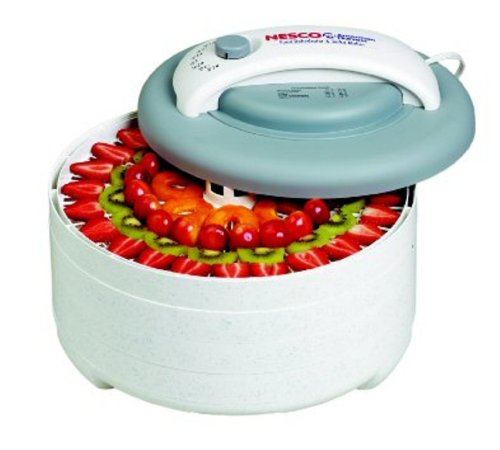
Nesco American Harvest 5-Tray FD-35 425-Watt Snackmaster Dehydrator

This unit features Nesco/American Harvest's innovative Top Mounted Powerhead that dries food quickly and evenly with superior results. Detaches to make dehydrator dishwasher safe for easy clean up. Fan-Flow Technology means faster, more even drying with no tray rotation necessary. Perfect for the beginner.


Many people want to make oven beef jerky because they either do not have or do not want to buy a dehydrator. Below you will find an easy to make and great tasting beef jerky recipe and all you need is your oven, some meat and a little bit of spices. You will have great tasting jerky in no time!

Our recipe calls for flank steak and the first thing you will need to do is cut it. However, before you try to cut the meat, make sure you put the meat in the freezer for half an hour because it will make it much easier to cut. Cut the meat into a quarter inch strips and make sure to cut the meat across the grain.

Next you will need to get the following ingredients:

1 Clove
4 tb Lemon Juice
1/2 c Honey
Pepper
Salt
1/2 c Soy Sauce

Mix all ingredients together and them place the meat into the marinade. Let this sit for at least 2 hours and a little longer if you are not in a hurry. Better yet, place it in the refrigerator over night to let it really marinate nice and good.

After your meat has had time to marinate, it is time to cook it. Take you meat slices and place them on a rack in a pan. Place the pan in your over and cook at 150 degrees for about 8- 12 hours. After eight hours you will want to start checking the jerky to make sure it is not overcooking.

When the meat is done is should bend but not break. You want to make sure it is not still wet and has dried out to a good level. If it breaks, you cooked it too long so make sure and adjust the cook time the following time you make your over beef jerky. Now sit back and enjoy your beef jerky.

Want to get even more free beef jerky recipe? Come on over to our beef jerky recipe site where we have a long list of jerky recipes for you. One of our favorites is our ground beef jerky recipes and our spicy beef jerky recipes. Come see what we all have to offer.

dehydrator

Friday, July 17, 2009

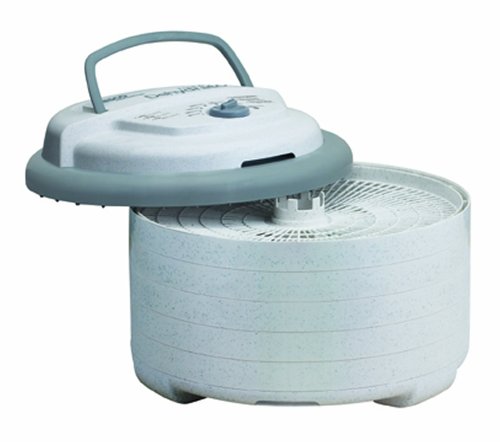
Nesco American Harvest FD-61 Snackmaster Encore Dehydrator and Jerky Maker

This convenient dehydrator makes great tasting, healthy snacks & jerky! Introducing the Snackmaster?? Encore???. It's Grey top and marbled design features 500 watts of drying power, and generates maximum speed and quality for dehydrating fruits, vegetables, beef jerky, and venison jerky. Helps dry food in hours, not days like ordinary food dehydrators. The top mounted fan eliminates the worry of liquids dripping into the the heating chamber!You can make delicious beef jerky, turkey jerky, fish jerky, trail mix, homemade yogurt, apple snacks, banana chips, dried soup mixes, dried tomatoes, watermelon, cantaloupe, honeydew, mangoes, papaya and other dried fruits at a fraction of the cost. Make dried herbs and spices; also make potpourri and dried flowers for any occasion.


Our needs as consumers are satisfied with products from abroad. In the US, every year we import millions of tons of oil, natural gas and other products that we need on a daily basis. This is mainly due to the fact that the production of these needed fuels is not enough to cover the needs of the consumers.

But how are these things transported? The imported products comes via ships, oil tankers that carry them over the sea, but on land we need pipelines to move them from the starting point, which is the production area, to their final destination, the consumers. People who are working in the industry need to know a lot of information regarding pipelines so they can maintain the high quality of their services.

A pipeline map is the first thing any company needs, because it supplies information regarding the route each pipeline follows. It is not very easy to keep tack of a tube that covers an area that sometimes exceeds a few hundred miles.

Oil pipelines are manufactured from plastic or steel tubes, with various diameters. Most of them are buried from to two meters underneath the ground, so an accurate pipeline map is necessary if you want to keep track of where your pipeline is.

Finding such an accurate pipeline map is not the easiest thing to do. The best choice you can make is with a specialized company that has dedicated most of its activity to creating highly accurate maps of all the major pipelines in the US.

Once you have found the desired pipeline map, the route of the pipelines are not enough. Sure you know where they are, but there are a lot more things you need to know regarding them. Pressurization, temperature variations and flow control are just a few of a large number of factors that influence the correct proceedings of daily activities when it comes to pipelines.

In order to have control over these factors, you need to have access to relevant data. A pipeline GIS - geographic information system - can help you do just that. To many this is a new term, so I'll try to explain what it consists of and how it can help you.

The pipeline GIS is a system that is capable of storing, integrating, analyzing, editing, sharing and displaying the much needed information regarding any pipeline. The whole idea behind this concept is based on user interactive queries.

A pipeline GIS is very easy to use and it provides the needed information in no time as opposed to the research you would have to do to gain it. You establish your point of interest, select what you want and the results are displayed in an instant. This will save you precious time and you can go on with your activities a lot faster than the traditional way.

Remember that I told you that a pipeline map should only be purchased from specialists? The same goes for a pipeline GIS and if you want the best products on the market all you need to do is go online and visit the website rextagstrategies.com.

Do not rely on second rate companies to provide vital information on pipelines. Choose the website mentioned afore as the source and you will receive the best data in the industry with a pipeline map and pipeline GIS from them.

dehydrator

Sunday, July 12, 2009

Nesco¿FD-1018P American Harvest 1000-Watt Gardenmaster Dehydrator and Jerky Maker


Halloween has always been a favorite time of year for me. Not only is it my birthday, but the air is clean and crisp, the leaves have turned colors and its just a very pretty time of year.

Id like to share some fun Halloween ideas and recipes with you:

Halloween cookie cutters are a must. You can use these cookie cutters on bread to make Halloween sandwiches. Kids love jack-o-lantern shaped sandwiches. You can spread their favorite sandwich topping on the bread once its cut.

Purchase M&Ms from a store that sells specific colors. Buy orange and green M&Ms and then use them in your favorite chocolate chip cookie recipe substituting the M&Ms for the chocolate chips.

You can also put those same M&Ms in your favorite rice krispy treat recipe. Its amazing how these two colors transform recipes into Halloween recipes.

Look for mini cookie cutters. They can often be found in kitchen specialty shops. If you find pumpkin mini cookie cutters, these work great on cheese. Buy sliced cheese. Cut the cheese with the mini cookie cutters and then put the slice of round cheese on a Ritz cracker.

Prepare your favorite brownie recipe and then top with candy corn pieces.

Make hamburgers and use your cookie cutters on full size slices of cheese. Serve open faced so that the pumpkin or ghost shaped cheese is on top.

Many stores sell spinach pasta. Green pasta with red sauce is very Halloween looking to kids.
Make english muffin pizzas. Add sauce and cheese and then cover with pepperoni slices. Use pineapple chunks to make eyes, nose and mouth.

What would Halloween be without pumpkin flavored items? Here are a few pumpkin recipes for you:

Pumpkin Dip

2 8-ounce packages cream cheese, softened

1 large 30-ounce can of pumpkin

4 cups powdered sugar

2 teaspoons cinnamon

2 teaspoons ginger

Mix everything together and serve. Kids love to dip both fruit and cookies into this dip.

And what about pumpkin muffins? I love pumpkin muffins warmed with butter on them:

Pumpkin Muffins

3 1/3 cups flour

3 cups sugar

2 teaspoons baking soda

1 1/2 teaspoons salt

1 teaspoon cinnamon

1 teaspoon nutmeg

1/4 teaspoon ground ginger

1 cup oil

4 eggs

2/3 cup water

2 cups pumpkin

Mix all dry ingredients together in a bowl. Add the remaining ingredients and mix. Pour into muffin tins. Batter will rise, so only fill the muffin tins 2/3 of the way full. Bake at 350 degrees for about 20 minutes.
Decorating your table can be fun also. Use a combination of blacks and oranges. Use cat or witch shaped bowls. I have a friend who owns plates, creamers and tea pots in the shape of cats. You can also sprinkle your M&Ms and candy corn on the table. The kids can eat the decorations.

Enjoy Halloween with your kids and their friends at home with all of the above treats and ideas.

Audreys mom always entertained when she was growing up. Audrey learned to prepare for large groups and has often entertained 15-30 people in her home at a time. You can find more great recipes at http://www.recipe-barn.com

dehydrator

Saturday, July 11, 2009

Nesco American Harvest FD-75PR 700-Watt Food Dehydrator

The NESCO Professional Food & Jerky Dehydrator has more power than most dehydrators -- 700 watts -- which means faster drying time. You will have results in hours, not days. The top mounted fan with patented Converga-Flow action pressurizes air downward through the outer ring and horizontally across each individual tray, converging at the center, for fast, even drying. No need to rotate trays. The adjustable thermostat allows you to dry different foods at proper temperatures (95-155 F), providing the flexibility to produce the best drying results. As your needs grow, the Professional Food & Jerky Dehydrator can be expanded up to 12 trays.


Today saw steel prices soar to record highs as a report released by world steel producers confirmed worries that current production has failed to keep pace with world demand. One industry official, who did not wish to be named, expects the panic buying to continue and noted that "for the past decade, prices of scrap steel fluctuated between $50-$80 USD/ton. Late last year, that price doubled to $150 -$200 USD/ton. By March 2008 it doubled again to $345USD.

Today's surge to $865 USD/ton reflects a depletion of steel reserves to historic lows and the inability to increase production to keep pace with world demand." One economist today noted that steel at these price levels will have a devastating effect on consumers worldwide. The world's economies are built on steel. Without it, the machine breaks down. Right now there simply isn't enough to go around.

Where will it stop? Nobody seems to know. After today's activity, many feel certain that more increases are ahead. How high will it go?

Well, it depends.

As the old' saying goes, there's good news and bad news. First, the good news. The above headline isn't real. The story is fiction and the record prices described haven't actually happened yet. The bad news is that word "yet." You see, while fiction now, a good part of what transpires in this story is slowly becoming reality as we speak.

Scrap steel, which was cheaply priced for years, really has risen to over $345.00/ Ton within the past few months. Reserves are being tapped. Worldwide demand for fuel, metals and food staples are creating shortages, and prices on these items continue to increase. China's recent economic expansion has had a huge impact on commodity supplies & prices. The same supply/demand fundamentals that have driven crude prices to new highs are now driving steel prices higher.

While demand for crude increases worldwide, US policy has been to conserve, rather than to increase supply. For years the strong dollar enabled the US to rely on the rest of the world to produce discounted resources that we would import to meet our nation's growing demand. The resulting complacency resulted in a reliance on aging systems without any new additions to take their place. Over 30 years have passed since a major nuclear power plant, oil refinery or steel mill has been built in this country. The last ones we did build, which were state-of-the-art in their time, are becoming aged and antiquated and are no longer capable of producing enough to sustain current demands.

As the once mighty Yankee dollar loses its luster, our ability to import shortfalls cheaply is no longer the viable option it once was. To make matters worse, the worm has turned in the sense that the recent strength of the Euro and the dollar's weakness are slowly turning the USA into an exporter where it once was the dominant importer. The result is an ever increasing demand on our already limited resources.

The shortages and resulting price increases we are seeing today are not an overnight occurrence. The US has more untapped natural resources than any country on the planet. As one of the largest consumers of the world's resources, one would think we would be thinking of ways to use what we have. Yet, for the past 30 years, the US has adopted a policy of using the resources of others while preserving our own, treating them like holy relics that should not be touched. Instead of finding ways to tap known resources, the US for the past 30 years has relied on the rest of the world to do it for us.

Americans feel that their appetite for foreign resources should be met on command. The world should not only produce whatever we want, but do it at a low price. So, if we have a gas shortage, it's the Middle-East's fault. Drill more wells but do it on your land and off your shores; build more refineries but do it in your cities. We can't do it in America because it's dangerous, it's bad for the environment, and it will pollute the oceans and destroy the planet, so you do it for us. Somehow, if another country does it, it's different. If prices go up in the process, however, the rest of the world is being greedy. These countries need to find a way to keep up with our demand. They need to expand and build but do it on their own dime, quickly and efficiently and without raising their prices. Anything less and we'll be outraged. How dare they? Unfortunately for the US, 30 years of neglect is not something that can be repaired anytime soon.

50 years ago, the USA was #1 in that we had the biggest and baddest of everything. We were building nuclear plants and had the world's largest coal mines, the biggest oil companies and the best refineries. The iron range was cooking with activity and the country was producing steel in the biggest, most efficient steel plants in the world. Pittsburg, Pennsylvania was the steel capital of the world, and the USA was the industrial engine of the planet that everyone else looked to as the model for building their own economies.

The 1970's was a time before computers, the internet and e-mail. Cell phones were the size of suit cases and a new technological age was in its infancy. Nuclear energy had its growing pains. The drilling and transportation of oil were still being done old school. We were adept at creating new technologies, but not at safeguarding them. Mistakes were made. While the rest of the world has adapted, refined and made full use of the new technologies, the US has not. More than 30 years have passed while the US continues to sit on the largest oil reserves in the world. We have not built a refinery, a steel mill or nuclear plant while the rest of the world has - and good ones at that. Yes we have the resources, but they not do us any good unless we utilize them.

While America sits idly by, the rest of the world has left us in the dust. The US has dropped from #1 to the 3rd largest producer of steel while Japan, a country with limited resources of its own, is now #2. We've regressed from being one of the largest producers to becoming the largest importer of crude in the world. The oil we drill we ship to the mid-east or to countries like Japan to refine, only to ship it back to the USA because we don't have the capacity or the refining capability in the refineries we do have to refine the types of oil we do pump.

We have the brightest minds in the world, and were responsible for bringing nuclear energy to the world. Unfortunately, France now holds the title of world leader in this technology. They are energy independent, building for themselves and the rest of the world modern nuclear plants that generate energy without incident or accident. The USA, once known as the nuclear knowledge center, no longer has people with the knowledge to build a plant even it we wanted to. Most of these people are too old or have moved on to the countries that will utilize their knowledge and know how.

Environmental activists must acknowledge that what happened in the past is past. It's 2008 and the technologies of today dwarf those that built the systems that caused concerns in the past. Look at other countries that didn't go into a cocoon, countries that have taken the technologies of today and adapted them to improve the processes and safeguards of the 1970's.

If France can produce safe and issue-free nuclear plants I think we can do the same here in the USA. If other countries can drill oil and ship and refine it without causing catastrophic effects, then I think we can too.

To continue to focus on the problems of 30 years ago and say that the same issues still exist is religion, not realism. In the end, we are responsible for the situation we find ourselves in today because of our own selfishness and greed. We must stop expecting others to do for us what we refuse to do for ourselves. In addition, we must stop criticizing them if they can't do it quickly or cheaply enough. And then we wonder why the rest of the world thinks Americans are a bunch of pompous, self-centered morons

We need to get with the program and show the world we are not self centered-morons. We are a nation rich in resources, but we misuse and abuse them. With all our knowledge, all our resources and all our abilities, we proudly pat ourselves on the back for building ethanol plants that burn the food we grow to make energy that we already have in the ground but refuse to drill for. There is currently a shortage of rice and other foods in many parts of the world. We may think we're cool and trendy and GREEN building ethanol plants to burn food to power our vehicles, but the rest of the world thinks we're fools.

In the end, it's a question of supply and demand. As world demand increases for the resources our planet has to offer, the supply needs to keep pace or some will have to use less. The best way to allocate limited supply is to eliminate some of the demand. This is done through prices. As prices rise, demand slows. Some will pay the new price and some won't. Prices rise until the supply and the demand meet equilibrium, where what is demanded meets what is available.

Today, prices continue to rise because demand is still greater than the supply. Other countries claim that the US needs to start contributing to world supply and not depend on everyone else to make up the shortfalls. The US continues to refuse to do so. Building wind mills, solar panels and BURNING OUR CORN AND BEETS IS NOT THE ANSWER.

There is hope, however. As prices rise more and more, Americans are changing their attitudes. Many now agree that we need to start implementing real programs for utilizing our available resources IN A SENSIBLE MANNER. We need to once again take the lead. We need to drill new wells, build new refineries and harness the new, safer nuclear energy. We need to update our old mines and mills, and catch up to the rest of the world.

Unfortunately, 30 years of ignoring the problem cannot be undone overnight. Eliminating the red tape and writing rules and regulations that will safeguard our systems without making them too expensive to build will take time. Building these systems and getting them manned and producing will not happen overnight. While we can fix the problem that took 30 years to create, we will have to live through a few more years until we turn things around. For now, supplies will continue to fall short in a world where demand continues to rise. Where it will all end is impossible to predict, but one thing is certain. Prices are high and heading higher, with nobody knowing where they will end for now.

SJF Material Handling Home
http://www.sjf.com

Steel Prices/Charts/Information
http://blog.sjf.com/

dehydrator
Wednesday, July 8, 2009

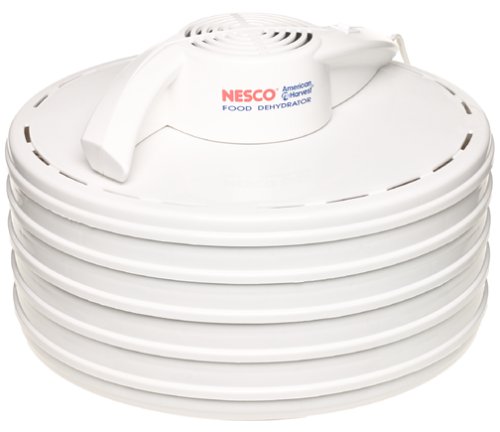
Making Sauerkraut and Pickled Vegetables at Home: Creat

Making Sauerkraut and Pickled Vegetables at Home - Klaus Kaufman Features & Specifications Making Sauerkraut and Pickled Vegetables at Home - Klaus KaufmanThis book provides creative recipes for lactic-fermented food to improve your health.With this book, discover the simple remedies and healing agents found in lactic acid-fermented foods. Step-by-step recipes will guide you through centuries-old methods.Great addition to our crock pots!


Now that we have covered location, soil, and how big you want your garden it is now time to determine what you would like to grow in it. Unfortunately, there isn't a list I can give you since each family has different needs, but as you plant your garden, think carefully about what you will actually do with the harvest, the time you have to preserve if necessary, and what your family likes to eat. If they hate cherry tomatoes, there is no sense in planting them!

Before you go to a nursery and see all those lush beautiful plants and get carried away, make sure you have a plan. Similar to grocery shopping, if you go without a list you will most likely end up buying items you do not need!

Start with you family's favorites, then check the yields on the seed packets to try to determine how much you will need. If you are purchasing plants from a nursery, ask them to help you choose. When deciding what to plant ask yourself:

1. Does my family like it?

2. Do I have the room to grow it?

3. Do I know where in my garden it will go?

4. What am I going to do with the harvest (ie dehydrate, can, freeze etc)

If you are planning on canning, dehydrating, freezing etc, make sure you have adequate supplies and resources for it. If you don't have an extra freezer, it may be difficult to freeze a lot of items. If you don't have a dehydrator, can you borrow one? And if you don't have canning supplies, can you borrow, share or purchase some?

If you are a beginning gardening, this is an area that will get easier with experience. Once you know what worked and what didn't your next time around planning your garden will be easier. Make sure you keep a garden journal and note yearly yields noting if you should plant more or plant less or at all!

Now that I have you convinced on the size, you will need to consider how much to grow. I recommend vegetables that are high yielding and do not take up a lot of space and are easy to maintain. These would be:

Bush snap beans, or pole beans

Peas

Leafy greens, loose leaf lettuce

Tomatoes

Bell pepper plants.

Herbs

Some vegetables that will take up more space but are still worth considering are:

Vining melons (like watermelon)

Squash (summer, zucchini, cucumbers, etc)

Pumpkins

Sweet corn

Before you choose what to plant, stop and think what your goals for you garden harvest? Is it to have a fresh garden salad on the table every night? Or do you want to can your own spaghetti sauce? Or both?

Another factor in determining what to plant is your zone, or basically what will grow in you area based on the climate. Often times on the back of your seed packets or on your plant tags it will say which zones it will grow in. You will need to know this zone in order to choose your plants. Obviously, if you are purchasing plants from a nursery you can be pretty sure it will grow in your zone. But if you are choosing seeds or ordering from a catalog, knowing your zone will come in handy. You can find a zone map here, and by typing in your zip code you will instantly know which zone you are in.

The last factor I would consider when determining what to plant is asking yourself if the plant is worth the work for what you get, and will it save you money at the grocery store? For me, potatoes are really not worth it to grow because I can buy them so cheap at the store, often marked down, and they would take up considerable space in my garden. I have not had much success in our area with watermelon, and since I cannot store it, it is easier for me to buy it at the grocery store where it goes on sale all summer long. Corn is so inexpensive, it is another item I typically do not grow. I do like the stalks for decoration though, and sometimes I will plant a few for that reason. Canned pumpkin is much easier if I want to make pumpkin pie, so I don't usually plant pumpkin. Consider what kind of tomatoes are always inexpensive at your store. Is it worth it to grow this kind? Maybe growing a different kind, more expensive variety, of tomato will work better for you. Your garden should save you money with your harvest, so take these things into consideration when you plant.

Don't limit yourself to only vegetables. Usually you can buy strawberry plants, blueberry bushes, raspberry bushes etc at any nursery or through a catalog (I like Four Seasons the best for price, quality and guarantee). Fruits are usually more permanent, in that they come up each year although you may have to wait to yield a harvest. Fruits are well worth it to consider planting as they are well worth the time, money and effort.

Stephanie is a homeschooling mother of 3 and owns A High And Noble calling, a blog to encourage and inspire women in their noble callings as homemakers, wives and mothers. You can read articles, find resources, and inspiration for your high and noble calling at http://www.ahighandnoblecalling.com

dehydrator

Total Juicing Book - Elaine LaLanne, Richard Benyo and Jack LaLanne

Total Juicing: The Complete Guide to Healthy and Delicious Fresh Fruit and Vegetable Juices by Elaine La Lanne, Richard Benyo, and Jack Lalanne Features & SpecificationsJuicing For Life Book - a review of the health benefits of juicing fresh fruit and veggies Total Juicing: The Complete Guide to Healthy and Delicious Fresh Fruit and Vegetable JuicesBy: Elaine LaLanne, Richard Benyo, and Jack LaLanneJUICE YOUR WAY TO HEALTH...EVEN HELP PREVENT CANCERAcross America, millions of people are discovering juicing as an easy, inexpensive, and delicious way to enjoy tremendous health and nutritional benefits. Today's new juice extractors have opened up an exciting avenue to taking control over your own health and well-being. Elaine and Jack LaLanne, who have been juicing for thirty years, discovered that fresh fruit and vegetable juices, and the fiber-rich pulp that the juicer yields, have excellent benefits when used in combination with a healthful diet. Now you can learn how to control weight and lower blood pressure, address such conditions as psoriasis, stomach ulcers, arthritis, anemia, and gout, and even help prevent cancer- all in your own kitchen. Total Juicing provides up-to-date information and more than 125 recipes for great juice combinations and for fruit and vegetable pulp. You'll find:An A-to-Z guide to juicing directions, vitamin and mineral content of fruits and vegetables, and health benefits of specific foods A weight-loss program that works-with fresh juicesThe dos and don'ts of making and storing juice Baby-food recipes from the juicer Terrific original recipes for breakfast drinks, lunchtime refershers, dinner beverages, flavorful desserts and bartender's tips as well Great recipe ideas for fiber-rich pulp 240 Pages


Many people from around the world enjoy the light flavor of chamomile tea. If you enjoy drinking the tea, you might be interest to know it is easy to grow your own chamomile.

Combine Gardening with Tea Drinking

Even if you are a beginner gardener, growing chamomile is easy. Start by buying some seeds from a local merchant. If you cant find any stores near you, there are many online seed stores to order from.

The seeds are very small, and can be scattered in a small area of your garden. Lightly rake the soil to cover them or cover with a thin layer of fine soil. Water and keep the soil slightly moist while the seeds germinate.

Chamomile grows well in North America. It can grow in relatively dry climates with a little watering. The plant doesnt grow very tall usually 24 inches is the tallest height. It can be used as ground cover or to fill in areas where you need a low lying plant.

Picking the Flowers

The flowers are bright yellow and slightly cone shaped. The blooms start out small and can grow up to a third of an inch across. To make tea, you need to pick the blooms before they seed. Once they turn a dull yellowish grey color, they have gone to seed. The seeded flowers dont have to go to waste keep the seeds to plant again next year.

After youve picked a fair amount, wash to get rid of any loose dirt. Shake off the excess water. You can air dry the flowers by putting them in a dry place in the house for several days. Covering lightly with cheesecloth can help keep dust off while they dry. If youd like the process to go faster, you can put them in the oven for several hours on a low heat. You dont want to bake them, just make the drying go faster. A food dehydrator is another way to speed up the drying process.

Chamomile makes a beautiful addition to the garden with the reward of providing you with your own, home grown tea.

Find more articles on tea at the Tea and More website. Find articles on blended chamomile tea and more related tea articles

dehydrator

Wednesday, July 1, 2009

Nesco American Harvest FD-61 Snackmaster Encore Dehydrator and Jerky Maker

This convenient dehydrator makes great tasting, healthy snacks & jerky! Introducing the Snackmaster?? Encore???. It's Grey top and marbled design features 500 watts of drying power, and generates maximum speed and quality for dehydrating fruits, vegetables, beef jerky, and venison jerky. Helps dry food in hours, not days like ordinary food dehydrators. The top mounted fan eliminates the worry of liquids dripping into the the heating chamber!You can make delicious beef jerky, turkey jerky, fish jerky, trail mix, homemade yogurt, apple snacks, banana chips, dried soup mixes, dried tomatoes, watermelon, cantaloupe, honeydew, mangoes, papaya and other dried fruits at a fraction of the cost. Make dried herbs and spices; also make potpourri and dried flowers for any occasion.


-Spinach will be even more tastier when we soak it in a mild sugar water and then cook it.

-Green Peas when cooked with a pinch of sugar, smells good.

-Amla Powder with honey or ghee taken daily after the supper keeps your eye sight brighter even after your 50's.

-Mix about 1 table spoon of milk with the poori dough, will make the poori's fluffy.

-If you mix 1/4 table spoon of sooji and 1/4 table spoon of sugar, it will resist the fluffiness of the poori for hours.

-Boil the tulsi leaves with pepper and sugar in water and drink it 3 times a day to control your Blood Pressure.

-Boil tulsi leaves and camphor leaves in water and drink it 2 times a day to get rid of cold and cough.

-Garlic is an antioxidant which when taken daily will prevent us from Cancer.

-Instead of putting coconut or til inside Modhakam you can also keep dry grapes, cashew nuts, dates, coloured and crushed dry coconut, tutty fruties. It will attract small children and will be an all time favourite snack/tiffin for them.

-Add salt to Morkuzhambu after removing it from the flame(gas stove).It will be thicker as a paste.

-Add fried rice powder to coconut mixed poriyals(vegetables) to make it crispier and even more tastier.

-Add salt to the vegetables after it becomes half cooked.

-Fry a tomato, onion, green chilly, carrot in oil and then grind the obtained paste along with coriander leaves and required salt to get the vegetable chutney.this chutney can be used as a side-dish for doas, idly and chappati, etc. It is a healthier dish suitable for all ages.

dehydrator